Company - MBX Systems
MBX Systems designs and delivers custom hardware solutions for companies with complex engineering, manufacturing, and global deployment needs. Through a combination of purpose-built hardware and its Hatch platform (a cloud-based management toolset for teams to collaborate and manage hardware programs in a 24/7 environment), MBX gives customers greater visibility and control across the entire hardware lifecycle.
The main challenge consisted of building the foundation for a viable Product Lifecycle Management tool that would reduce program administration costs for customers by consolidating their engineering, manufacturing, logistics, and end user data in a fully interactive 24/7 environment.
MBX already had a customer portal at the time which held some features of a PLM, but it hadn’t been updated for at least a decade. As we know, things are changing constantly and as you can imagine, the tool was pretty outdated and lacking vital features that help companies manage their software and hardware better.
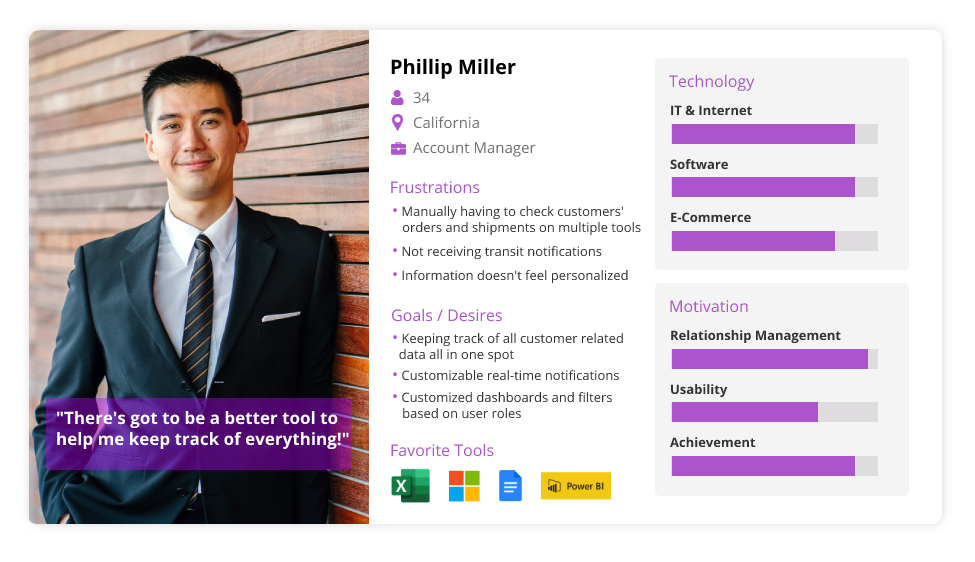
Using a User Centered Design approach, the steps I took early on included user research and analysis. Hatch was anticipated to have users from a range of backgrounds including engineering, sales, manufacturing, and supply chain to name a few. It was vital to learn about and identify the specific types of individuals who will use the product and what they might use it for. Interviews and personas helped paint a better picture for the whole team as we uncovered ways in which users would like to use a tool like Hatch as well as current pain points our users were facing with current tools already on the market. Synchronously, I working closely with key stakeholders to uncover business goals that needed to be met. Stakeholder interviews were held to uncover these key goals.
It was learned early on that many of our target users had needs that weren't being met by the tools already on the market. A great deal of these users wished for features that they had yet to find accessible within their current toolset. It was through the user needs & desires that we were able to gain fuel for the framework that Hatch needed to embody:
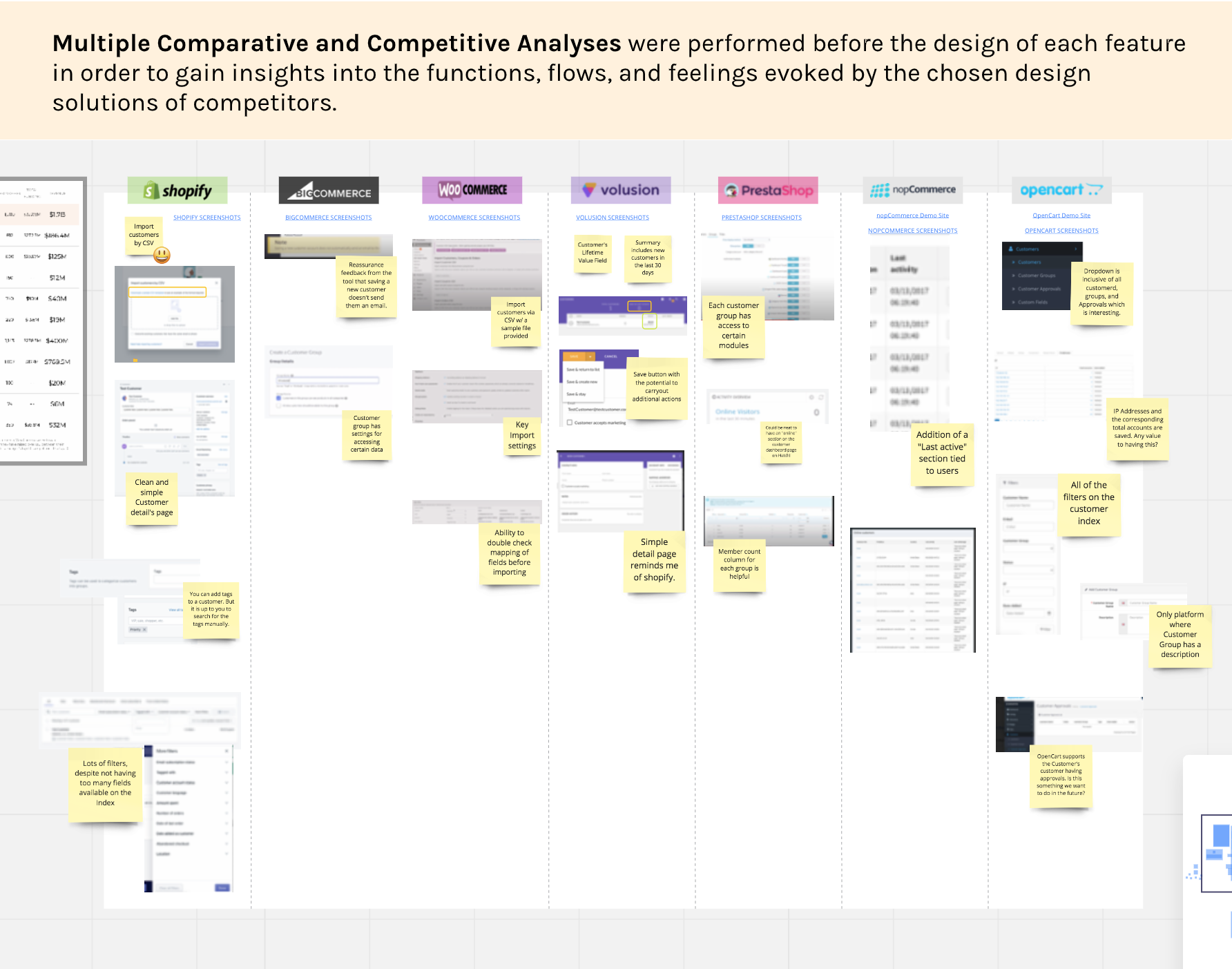
This gave me insights into areas in which we can build a tool to truly help alleviate the daily pain our users faced. as well as the key features that were important to them. These interviews helped me understand the business goal needs that needed to be met. Through these interviews, I also gained better insight into the methods and tools currently being utilized by our end users. I looked into product demos for the tools utilized by our users as well as demos for tools outside of our competitors. Through this research I was able to uncover key features that would be beneficial for Hatch and the given customer data currently accessible in the databases.
After gathering and analyzing insights, the concept design phase started. Every new feature was mocked up and tested to ensure that the design was on the right track with meeting users' needs. Once wireframes had reached a state to proceed with high fidelity, prototypes were flushed out with interactions mimicking the final product. I tested these prototypes with users once more to ensure I was on the right track in creating a feature that would successfully meet the users' needs before sending the designs off to the developers.
During the implementation phase, I worked closely with the developers making sure to provide design aid when needed. When each feature's page had been completed, I looked through the design once more to make sure that it not only looked good, but also behaved and interacted properly. When all was well, I gave the green light to the product owner that it was ready to go live!
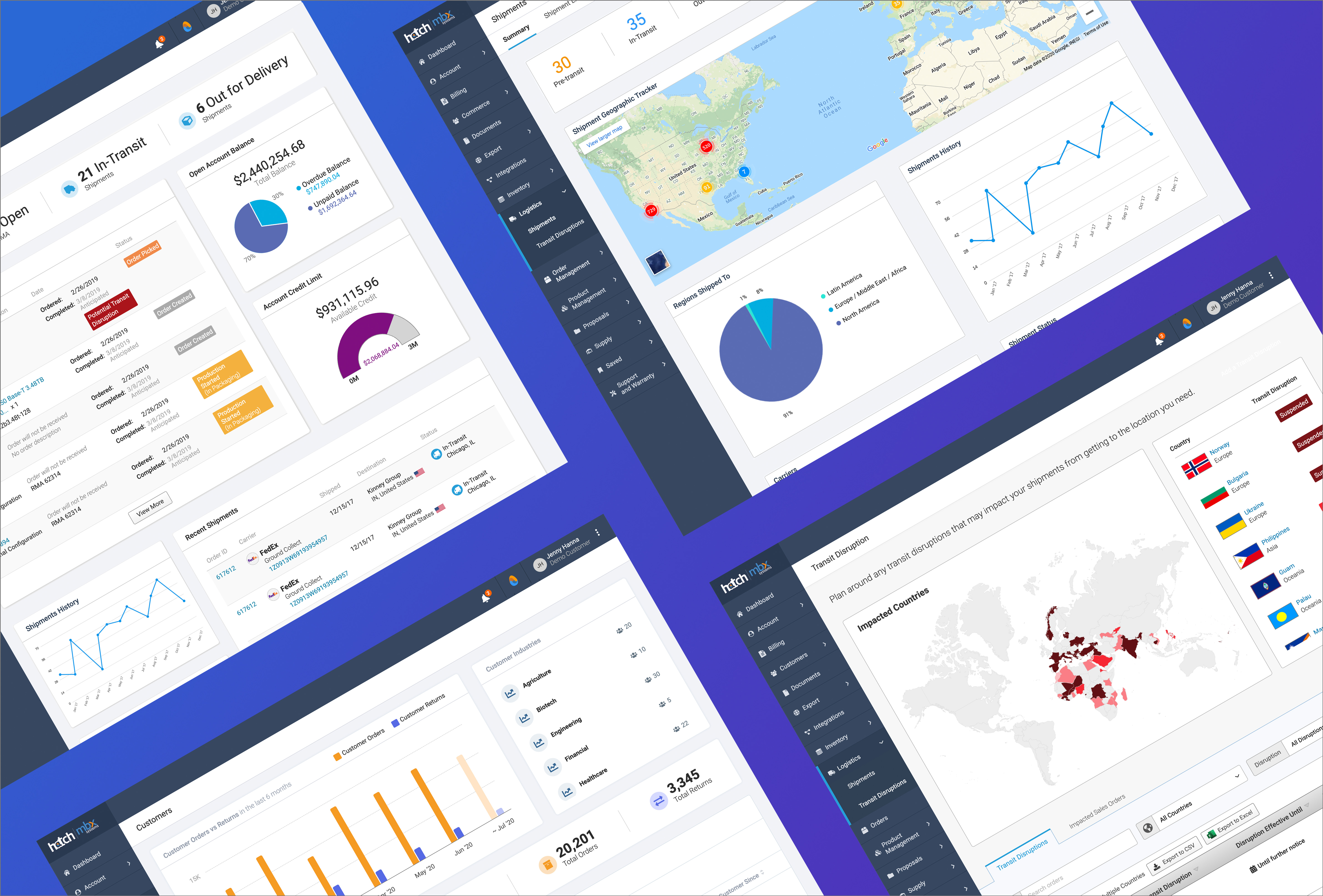
Every module in Hatch followed a consistent navigation system, shared status language, and a progressive detail structure — so new users could get their bearings quickly, while power users could dive into granular data without friction. It wasn’t just a portal; it became the operational backbone for how hardware teams ran their programs, from initial design all the way through global delivery!
The right answer before the customer thinks to ask
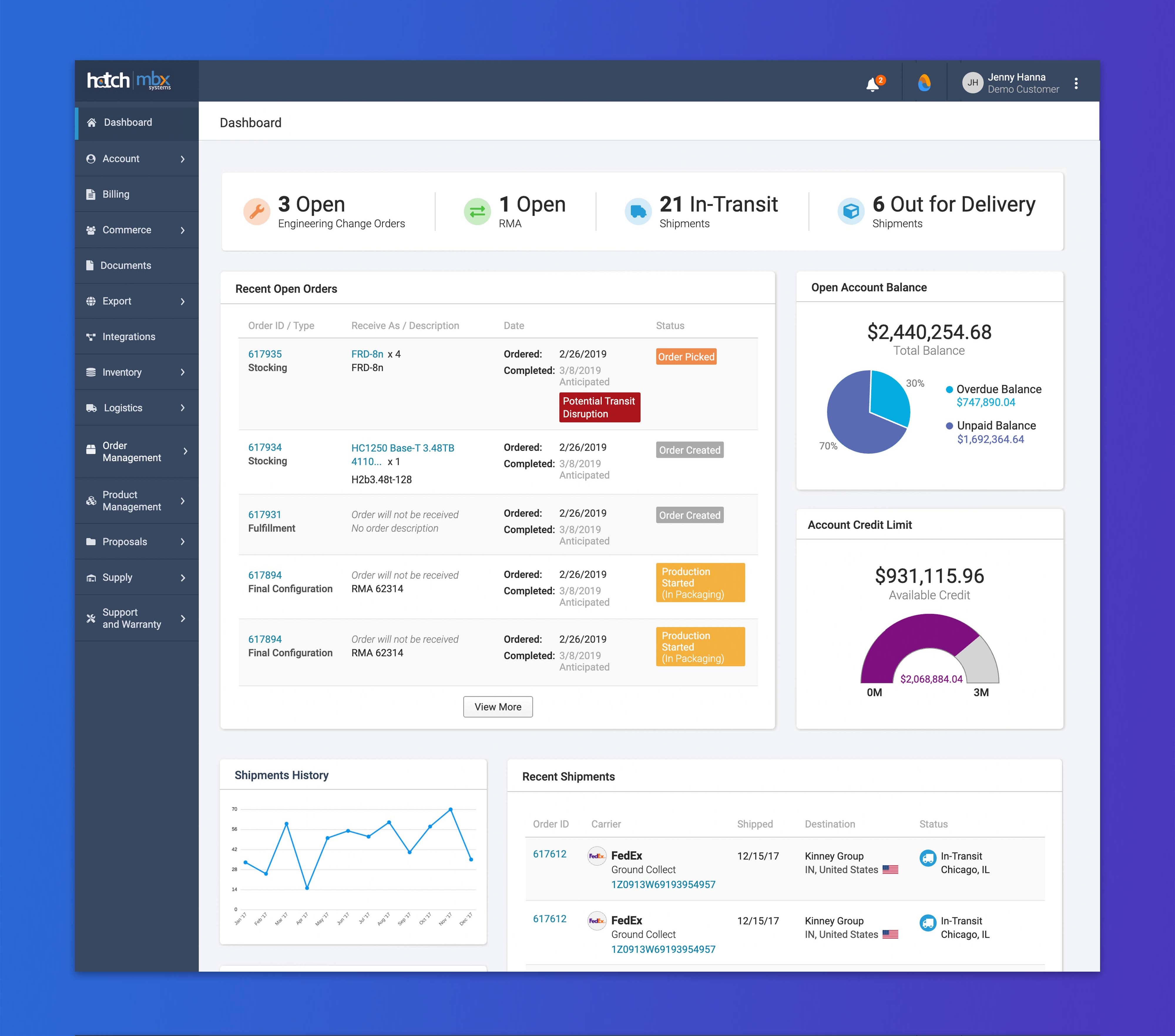
The dashboard was designed to lead with what matters most operationally: open engineering change orders, in-transit and out-for-delivery shipments, and account financials. A program manager can assess the health of their program in seconds. Recent orders surface with live status badges, no navigation required.
Design Decision: The dashboard was designed around one question: what does healthy look like, and are we there? Every element — open change orders, shipment stages, account balance, recent order statuses — was chosen because it represents a vital sign of the program. The goal wasn't to be a launchpad into other pages. It was to be the one view where a user could land, absorb the state of everything at once, and immediately know where their attention was needed most.
Inventory as a financial instrument, not just a count
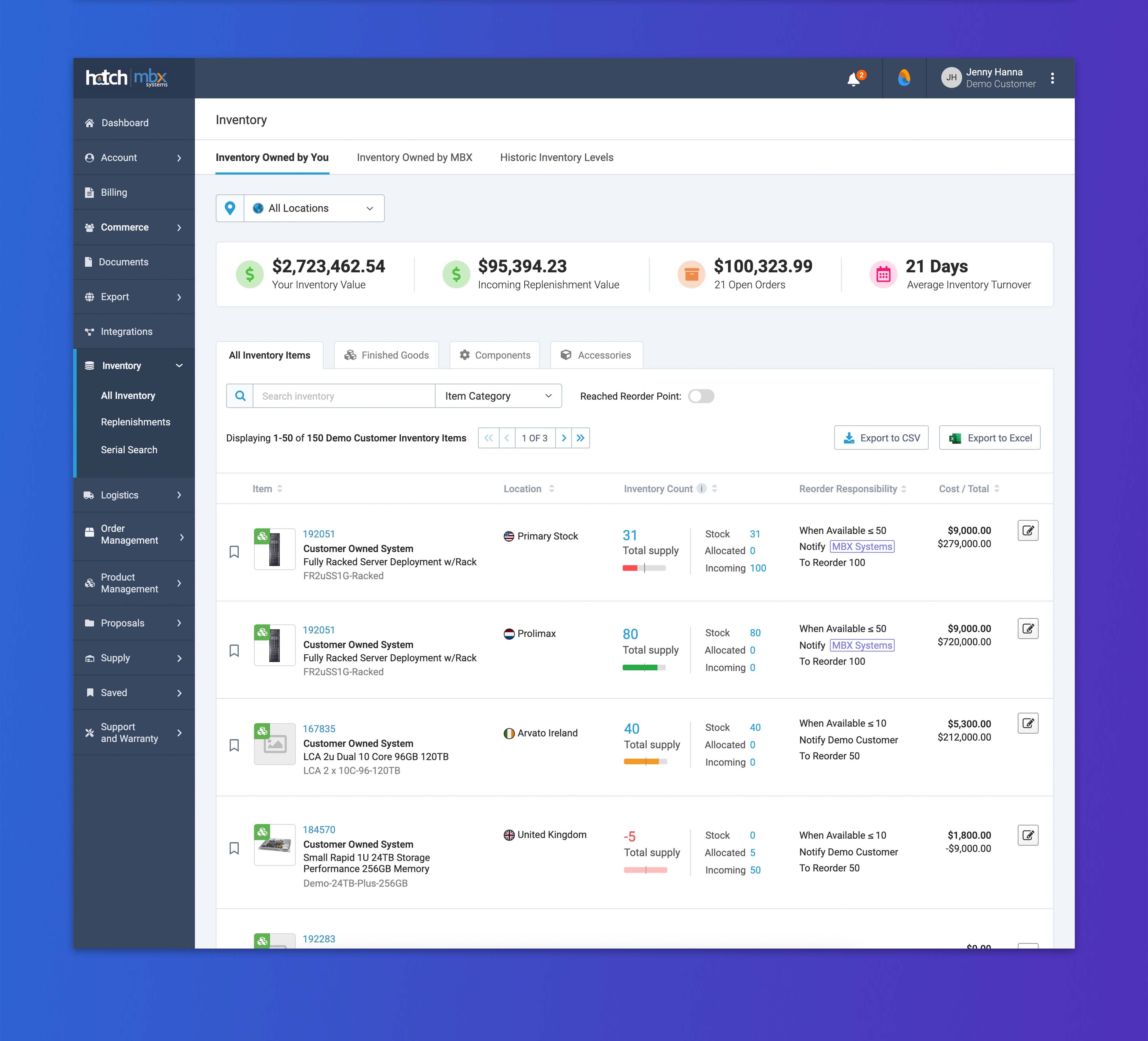
The inventory module leads with financial headline metrics — total inventory value, incoming replenishment value, open orders, and average turnover days — before surfacing the item-level detail below. Each inventory row shows stock count, allocated quantity, incoming units, and reorder threshold in a compact format, with reorder responsibility clearly attributed so nothing falls through the cracks.
Design Decision: Putting dollar values at the top of inventory was a deliberate reframe. Hardware inventory isn't just a logistics problem — it's a capital problem. Designing for that changes how customers prioritize attention.
A pipeline that mirrors how work actually flows
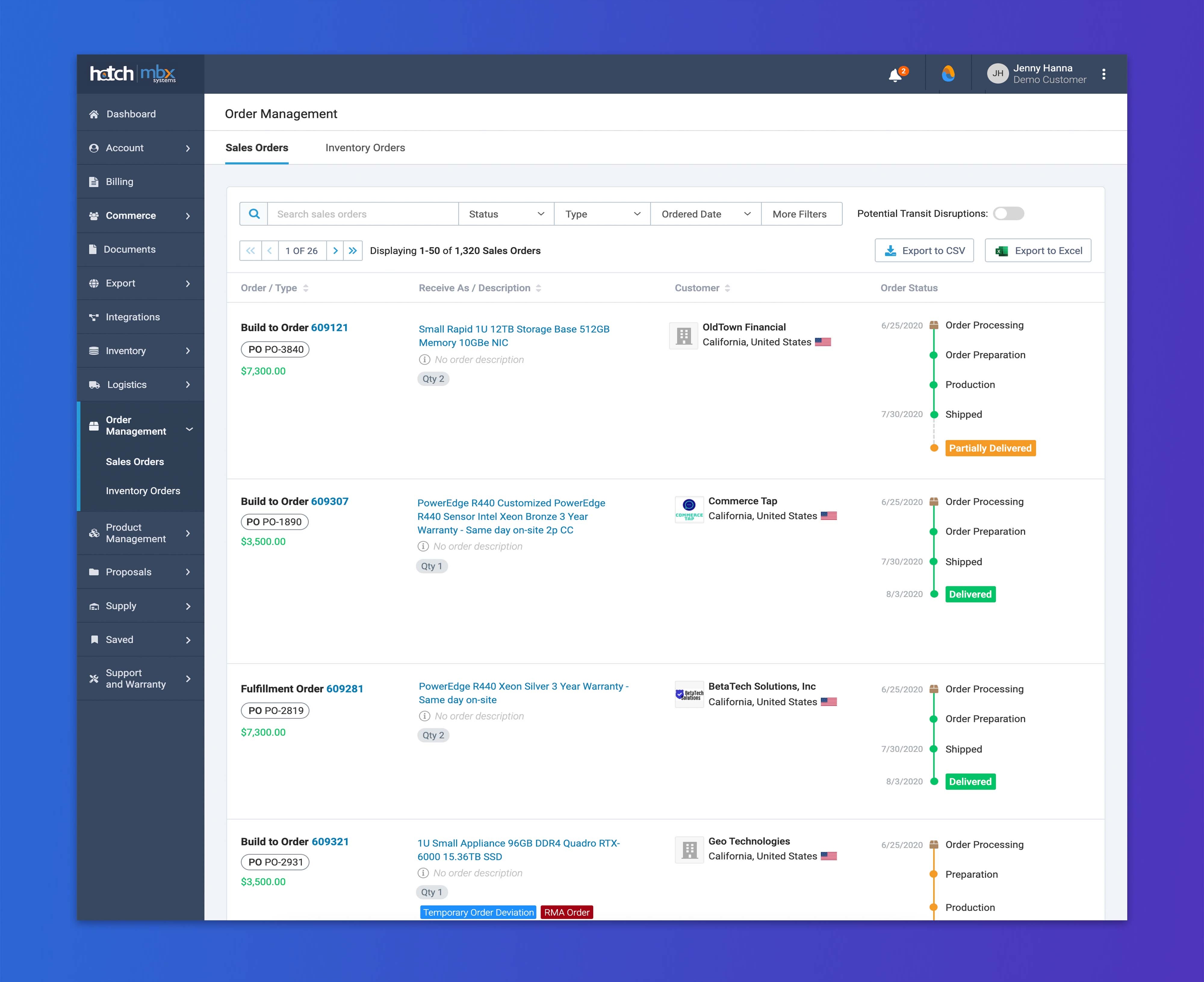
Each sales order shows exactly where it stands in the pipeline — from processing and preparation through production, shipping, and delivery. Critical flags like "Potential Transit Disruption" and "RMA Order" appear right on the order, so teams spot problems the moment they arise instead of hunting for them.
Design Decision: Order management is where anxiety lives in a hardware program. The design decision was to make that anxiety addressable — giving every order a visible history of where it's been and a clear picture of where it's going, so teams spend less time chasing status and more time acting on it.
Hatch replaced fragmented, manual workflows with a single platform that gave enterprise hardware teams real visibility into their programs for the first time.
Building Hatch from zero meant every decision mattered. The result was a platform that earned its place as the operational backbone of some of the most complex hardware programs in the world.
"We are reshaping the customer experience, utilizing Hatch's innovative capabilities to provide customers an unmatched level of operational transparency and direct access to real-time information."
Chris Tucker, CEO — MBX Systems
I'm a Product Designer based in Chicago with experience in delivering 0 → 1 products that meet business goals.