Company - Venminder
Venminder is a vendor risk management company that helps organizations manage third-party risk, compliance, and oversight through a centralized platform combining software, data, and expert services.
What are vendor questionnaires?
In Third-Party Risk Management (TPRM), vendor questionnaires are structured sets of questions sent to third-party vendors to evaluate how they manage risk. They’re used to gather evidence and insight across key risk domains before onboarding a vendor and throughout the vendor lifecycle.
What is the point of tiered questions?
Companies use a tiered approach to vendor questionnaires so the depth of questions matches the level of risk a vendor presents. This ensures low-risk vendors aren’t overburdened, while higher-risk vendors receive more thorough, in-depth questions that drive clearer, higher-quality responses. The result is more efficient reviews and stronger insight for risk teams.
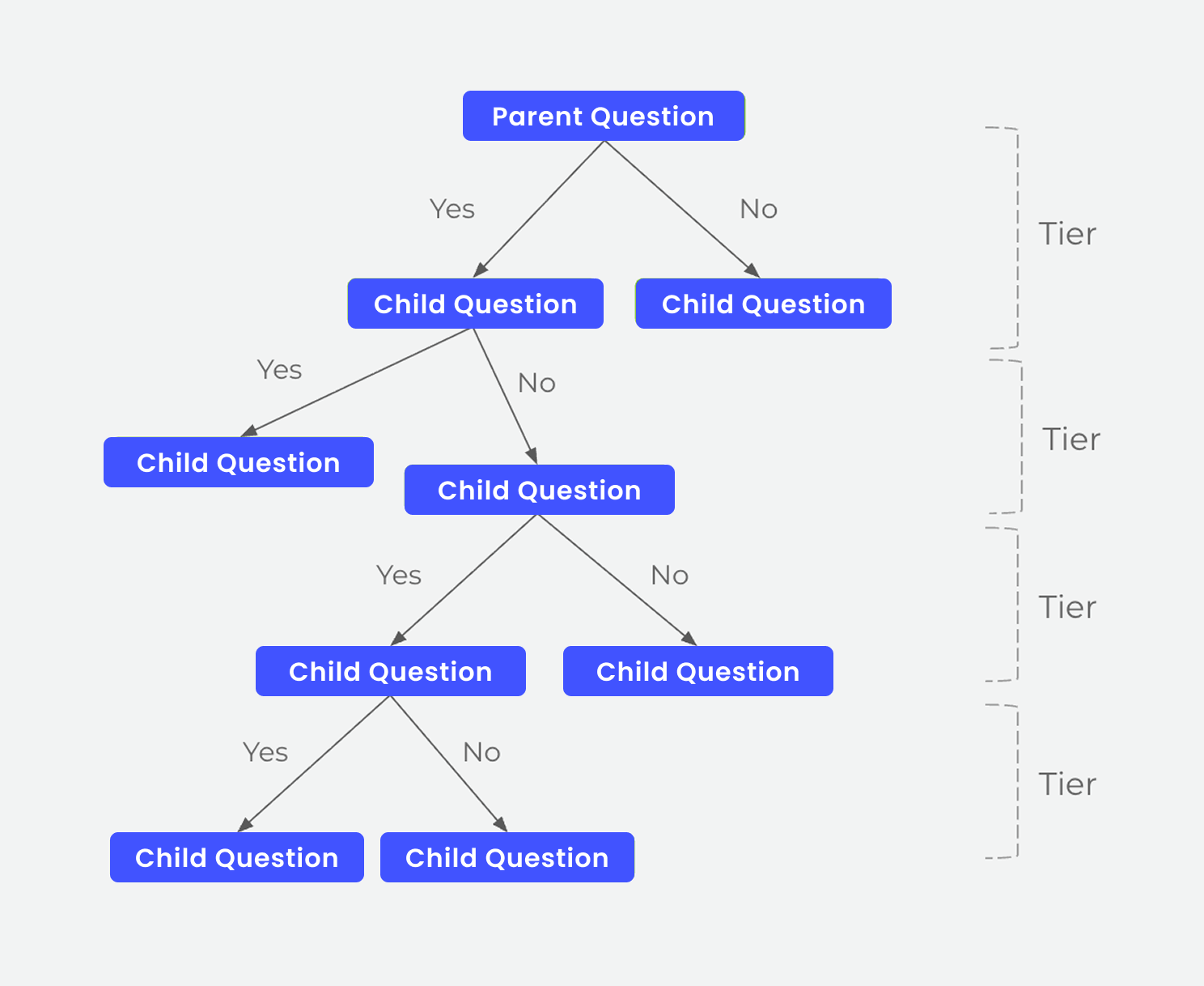
1. While the Venminder platform had a functional vendor questionnaire feature, the current state only supported the addition of one child question and not a multi-tier approach.

2. The existing questionnaire framework was not designed to support tiered questions. Adding this functionality would overcrowd the interface and result in a confusing, unusable experience.


Goals: Efficiently collect accurate vendor information at the appropriate depth
Fear: Missing critical information or creating unnecessary vendor friction
Needs: Scalable, risk-based questionnaires that reduce manual work
To understand the limitations of the existing questionnaire experience, I worked alongside the Product Manager to conduct stakeholder interviews with internal risk and vendor management teams who use the tool often.
Research revealed that a single-layer questionnaire model failed to scale with vendor complexity, creating inefficiencies for internal teams and friction for external users. These insights informed the design of a tiered questionnaire framework that enables proportional depth, improves response quality, and supports more scalable vendor oversight.
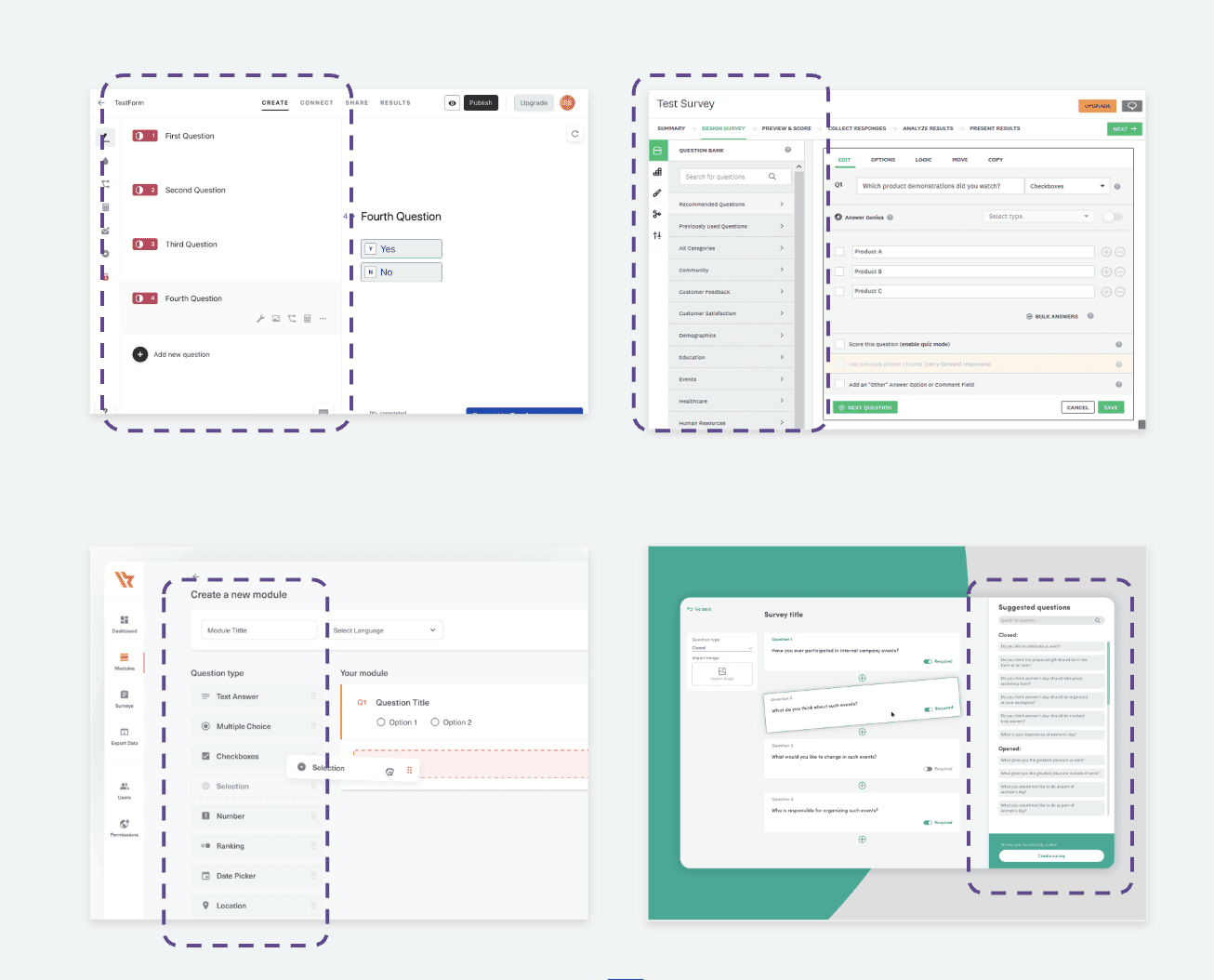
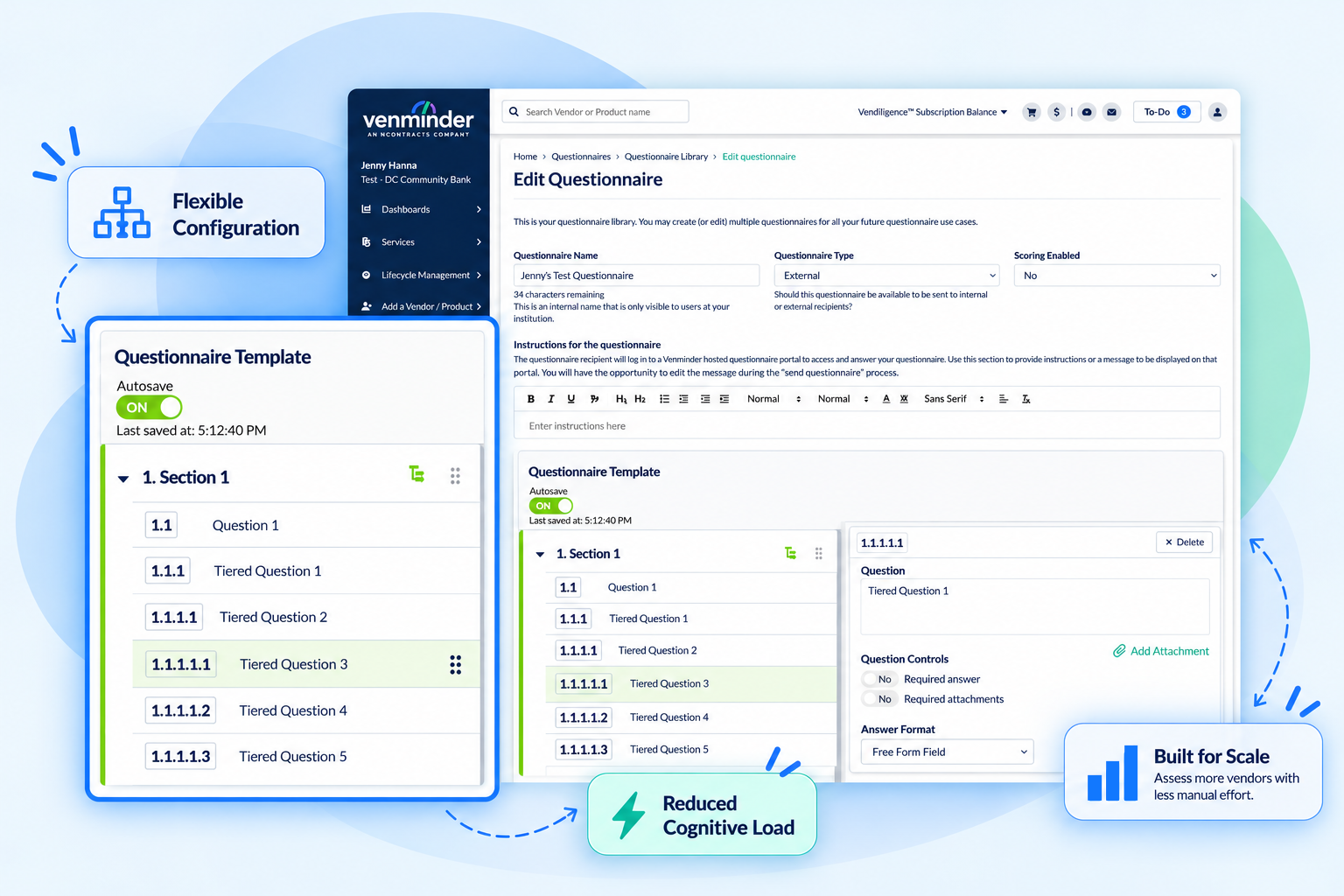
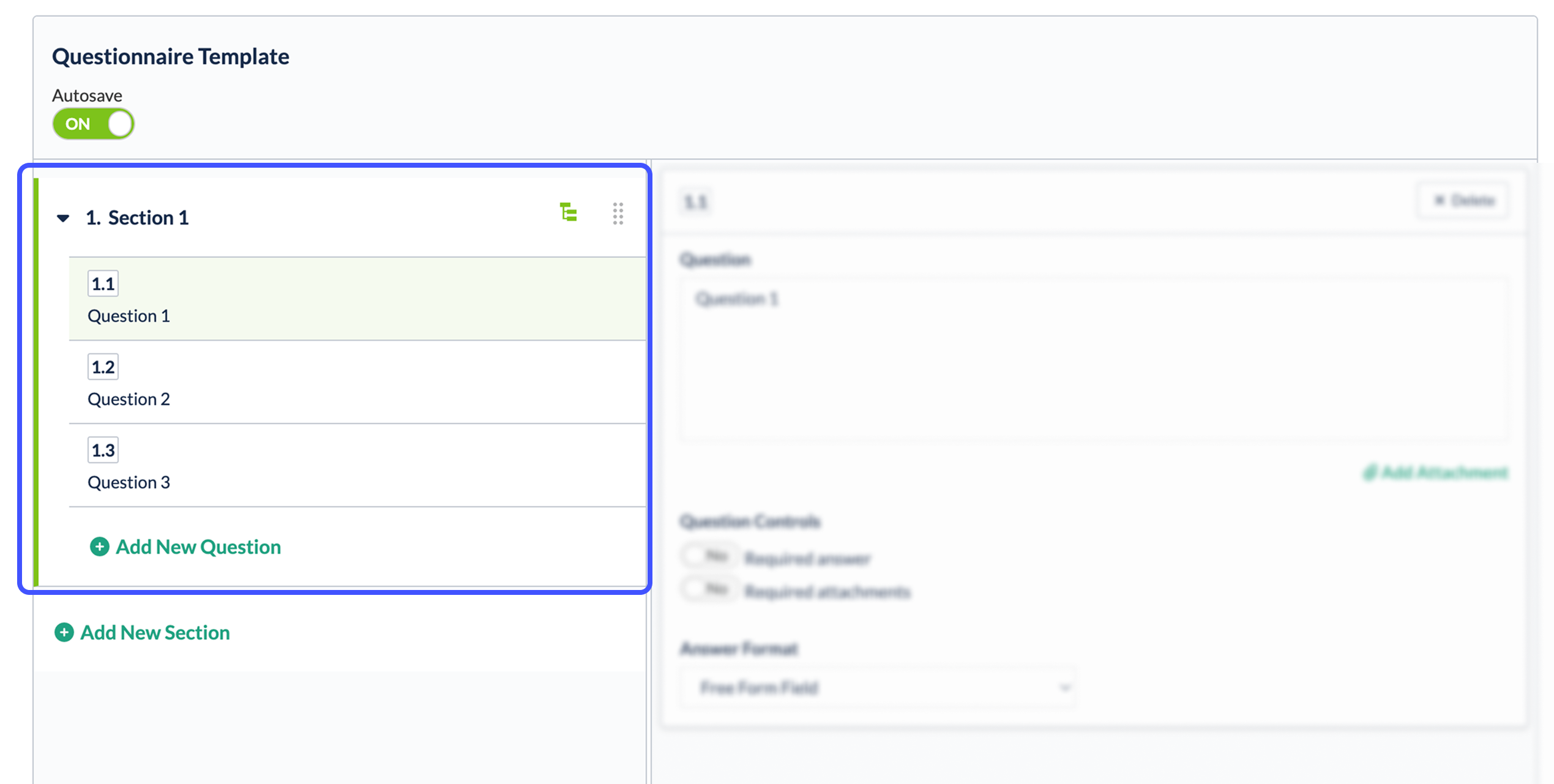
I transitioned the questionnaire builder from a single-panel layout to a two-panel UI, allowing question hierarchy and question details to coexist without competing for space. This created a more scalable foundation for supporting deeper, tiered question structures.
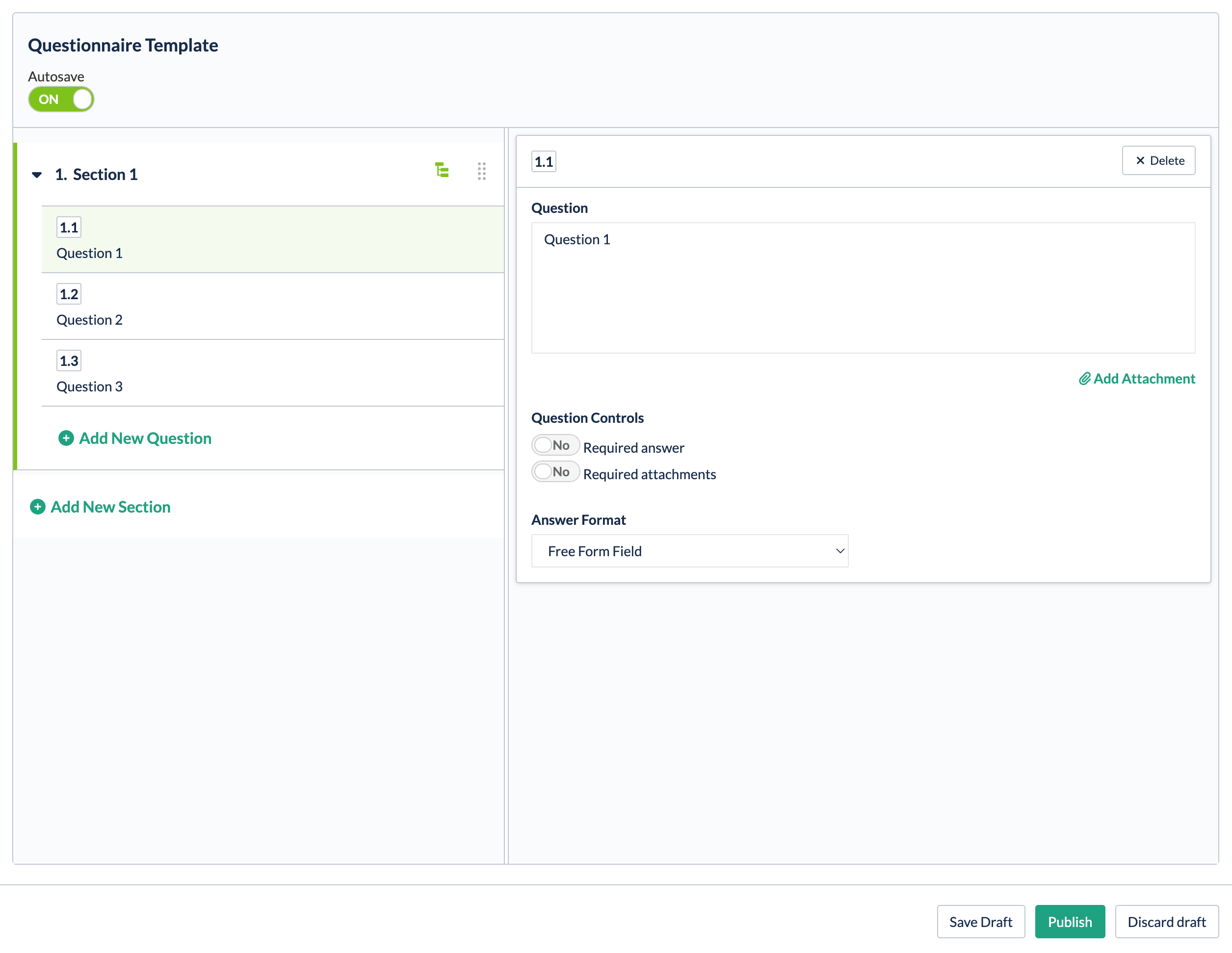
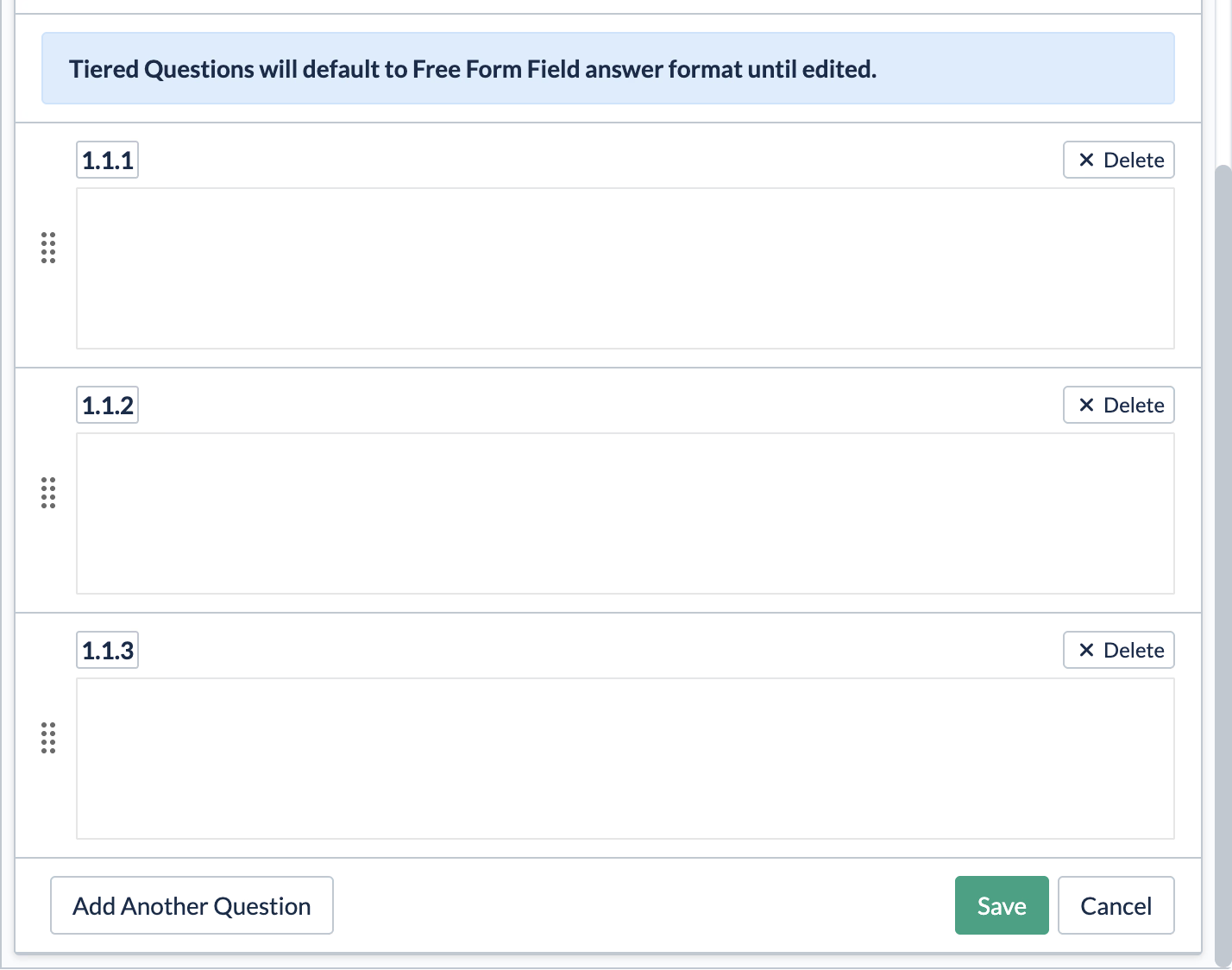
To help teams get started faster, I introduced preloaded templates with three default questions. This reduced manual effort and provided a clear starting point without limiting customization.
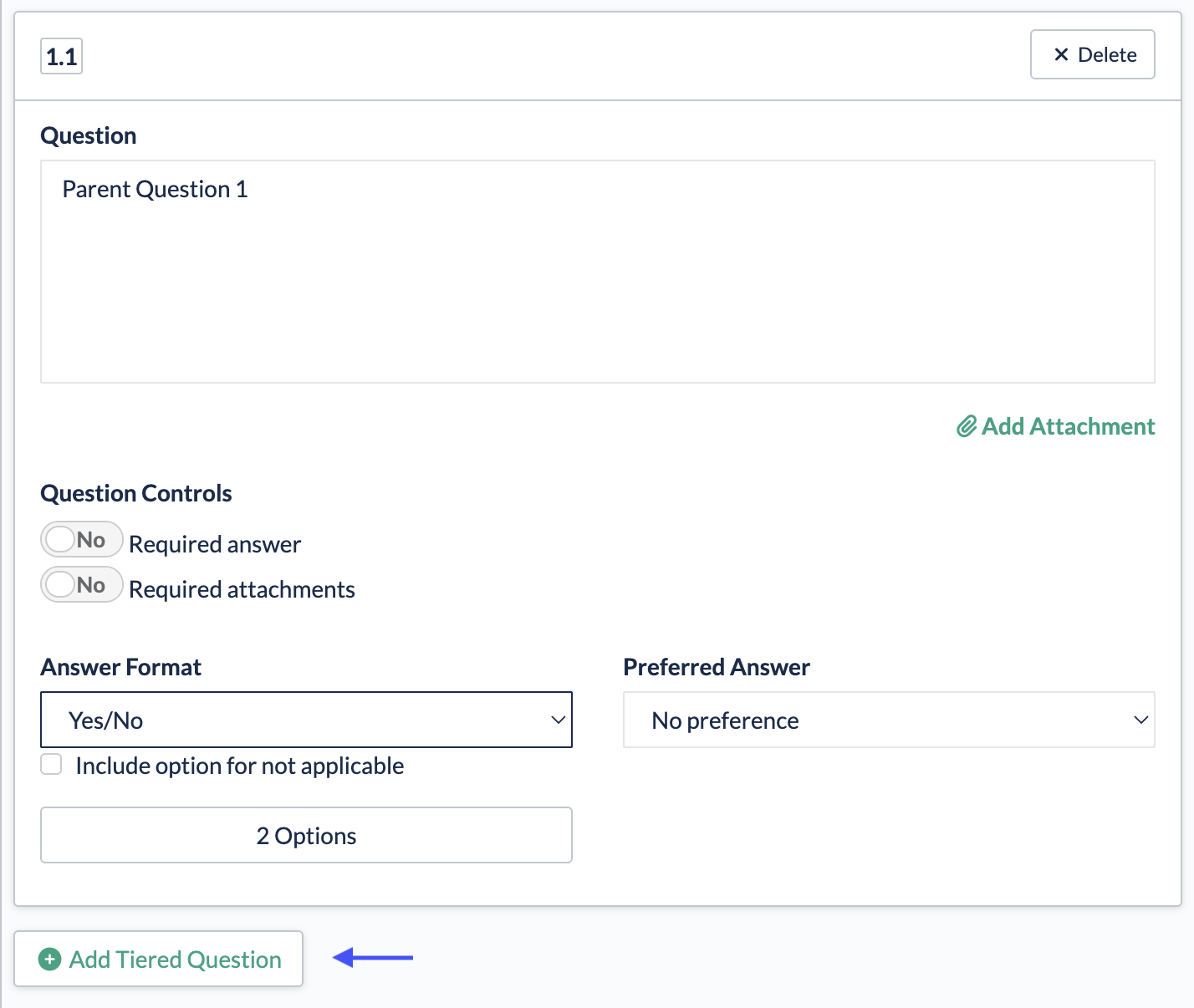
Free-form answers are the default response type when creating a question. When a response is changed to a structured option, the UI prompts users to add tiered follow-up questions. This helps teams introduce depth naturally, only when it becomes relevant.
By default, the pre-loaded questions are in a free form format, which does not support tired logic.
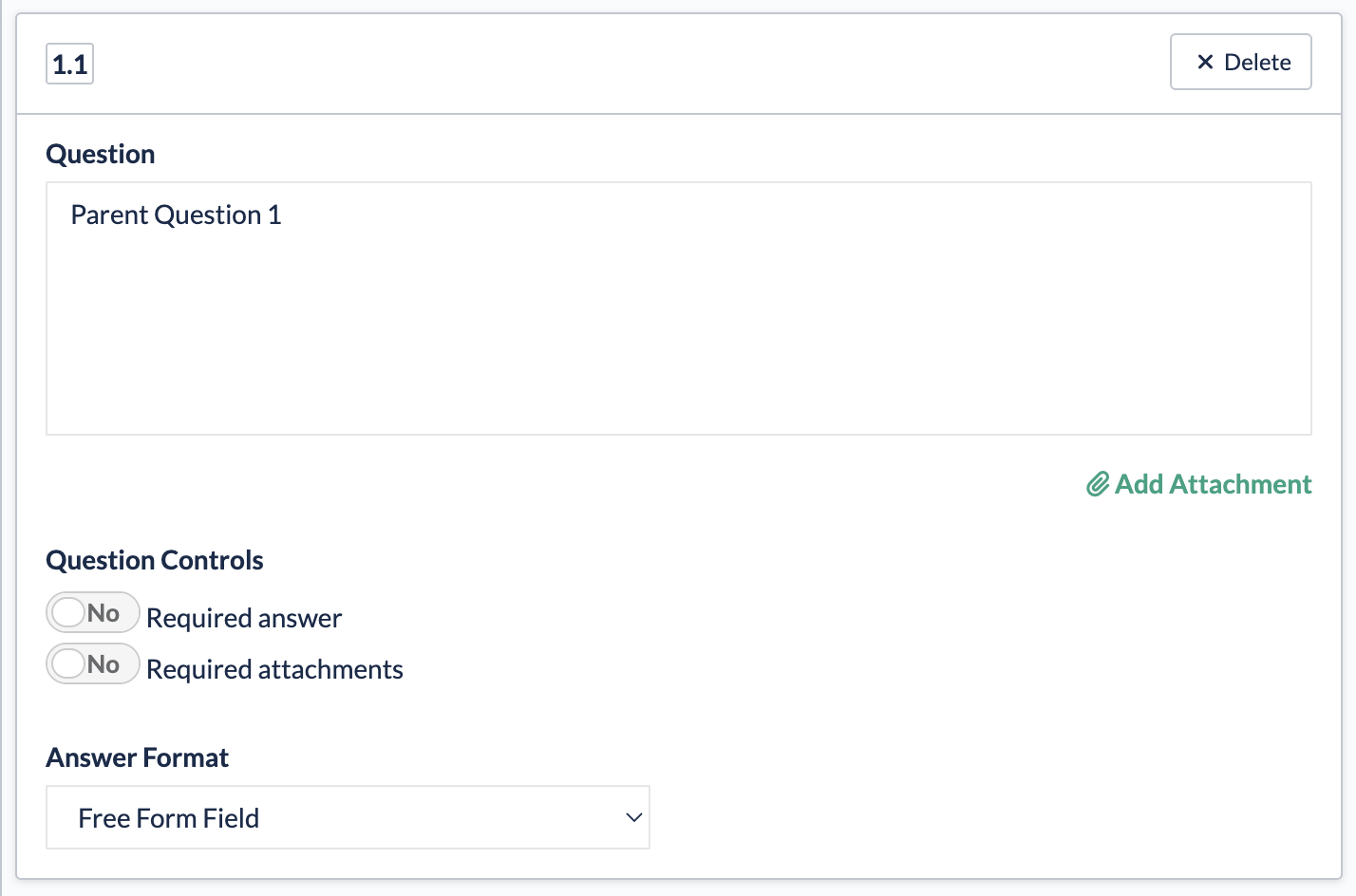
Switching to alternative answer formats like “Yes/No, Dropdown Select, or Multi-select Dropdown" options enables tiered questioning. This allows the app to use a user’s initial response to dynamically probe deeper, capturing more nuanced and qualitative feedback through a structured, progressive flow.
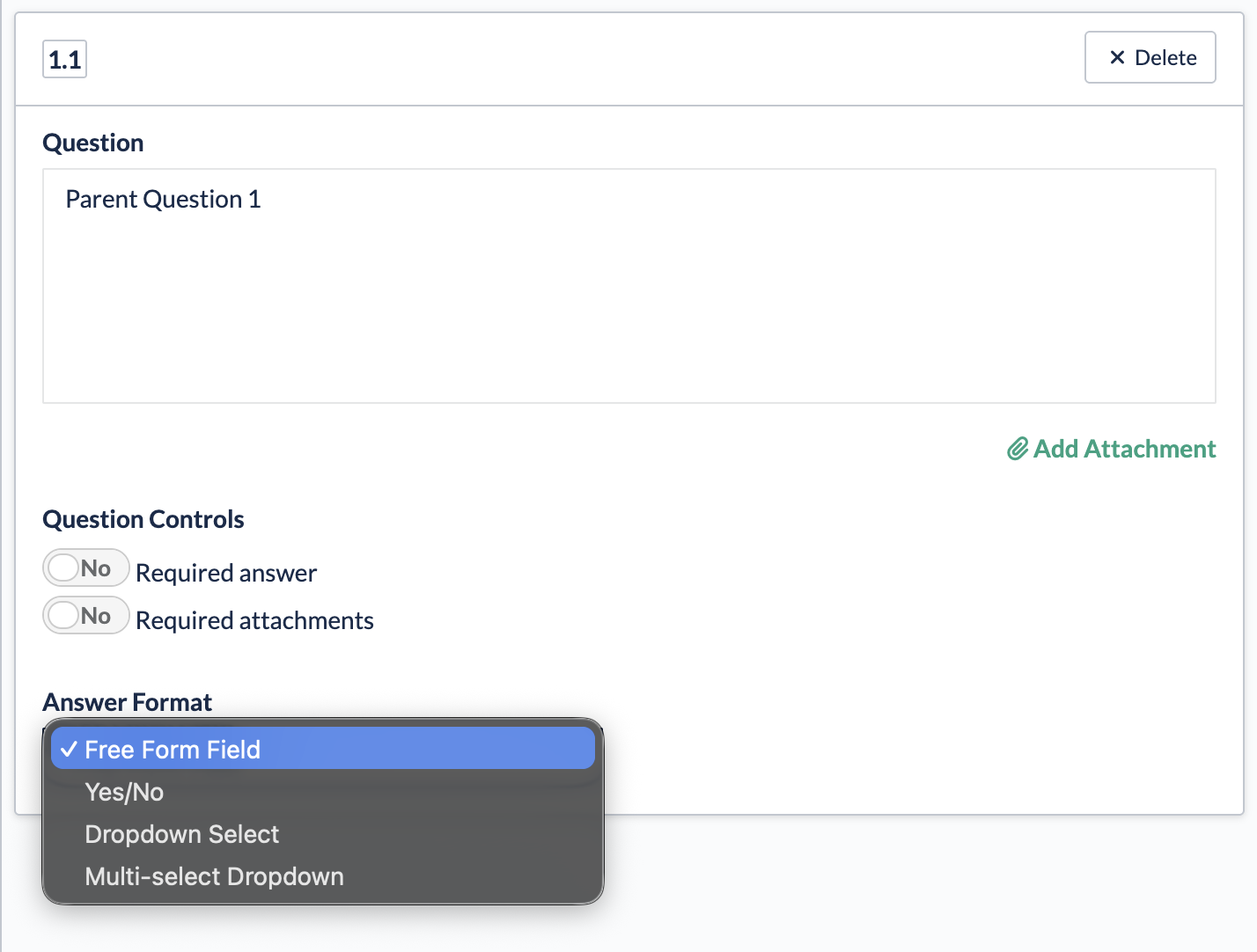
When a different answer format is selected, the system unlocks tiered questioning. Each response becomes a stepping stone, guiding the flow of follow-up questions and helping teams gather richer, more contextual feedback without adding friction to the experience.
Tiered questions start with three default entries to give teams a quick, consistent starting point. These can be edited or removed at any time, keeping things fast without limiting flexibility.
This work turned a flat, one-size-fits-all questionnaire into a flexible, tiered experience that scales with vendor complexity. Teams can now collect deeper, more meaningful information without adding unnecessary work for themselves or their vendors.
I'm a Product Designer based in Chicago with experience in delivering 0 → 1 products that meet business goals.