Kidsband was birthed as an innovative idea for DePaul University's Launch DePaul competition, a student entrepreneurship pitch competition held on May 5, 2015, hosted by DePaul's Coleman Entrepreneurship Center.
The event gave DePaul students and recent alumni the chance to pitch their business proposals to professional investors and established entrepreneurs. Six student ventures were featured overall, and the contest was divided into separate divisions for undergraduates and graduate students. Each division awarded first, second, and third place prizes of $4,000, $2,500, and $1,000 respectively.
Parents and guardians with young children often face constant anxiety over their child's safety and wellbeing, yet no affordable, all-in-one monitoring solution existed that combined health tracking and location awareness in a child-friendly wearable. The challenge was to design an intuitive mobile experience that gave parents real-time peace of mind without feeling overwhelming or overly clinical.
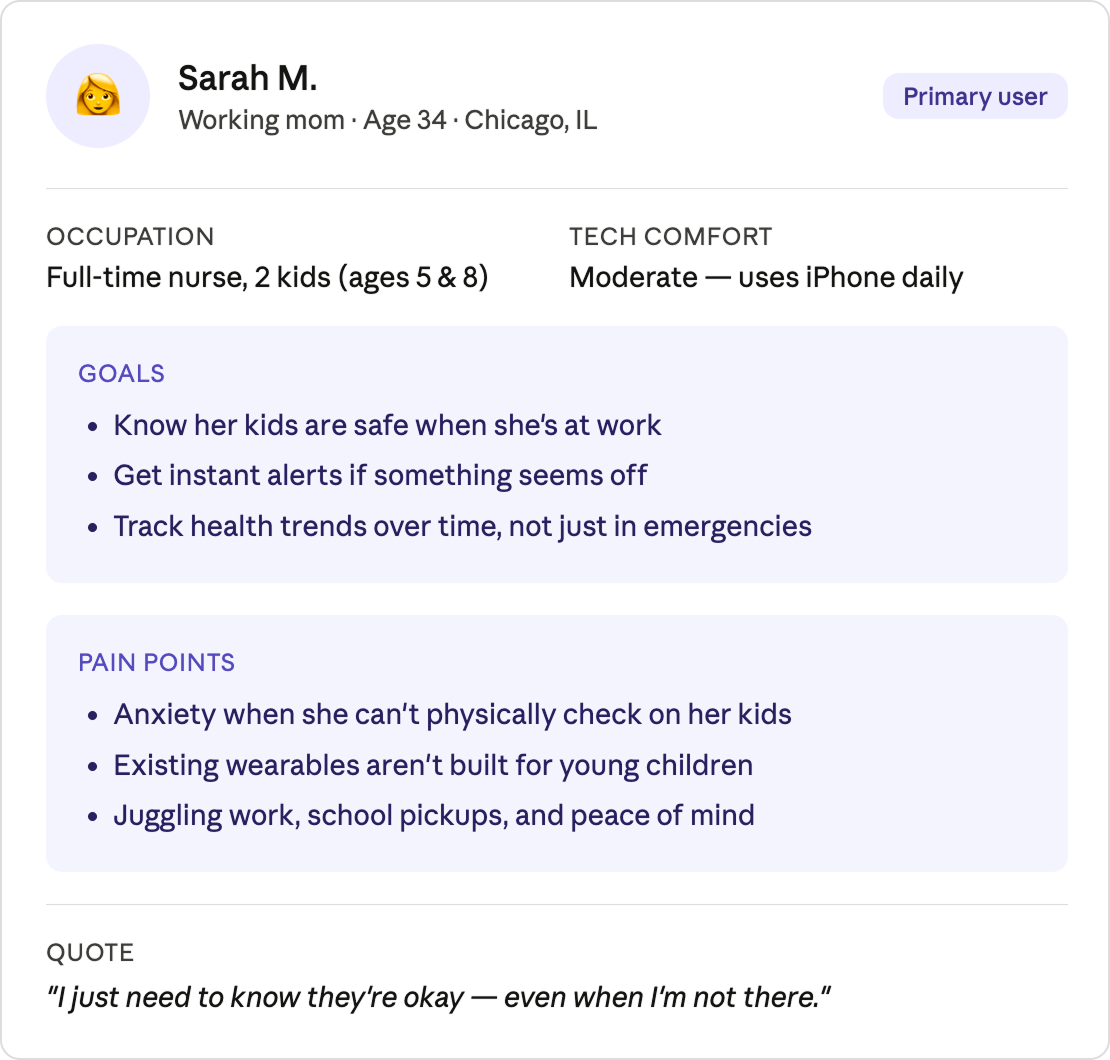
The project began with a clear human need — my co-creator was a single mother and full-time student whose son's safety was a constant concern while she was away. Her lived experience became the foundation for Kidsband and grounded every design decision that followed.
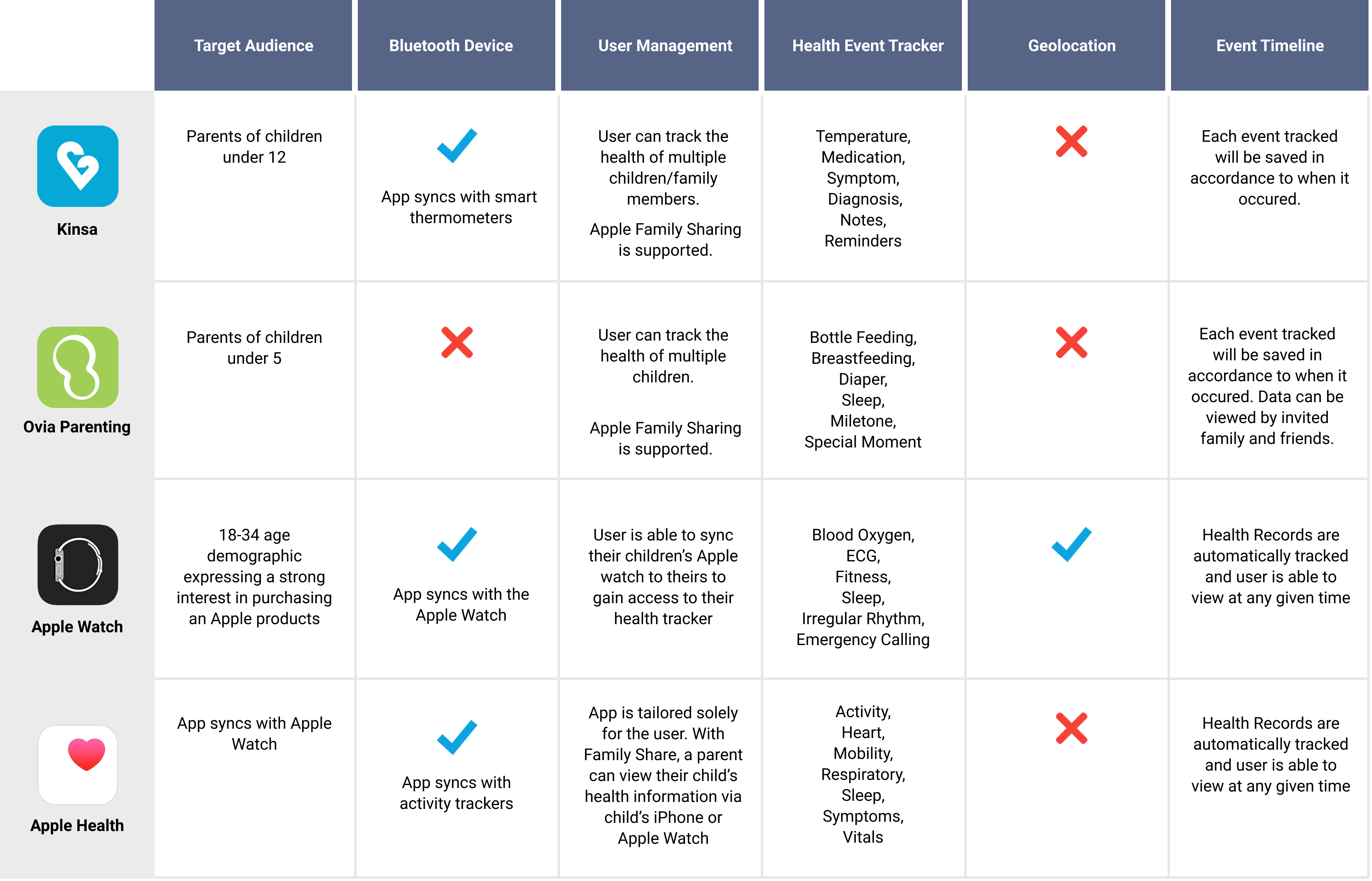
From there, I led a competitive analysis against existing health tracking tools on the market, most notably Fitbit, to identify feature gaps and opportunities. Armed with those insights, I moved into user research — conducting interviews with parents and guardians to validate assumptions and uncover shared pain points around child safety and monitoring.
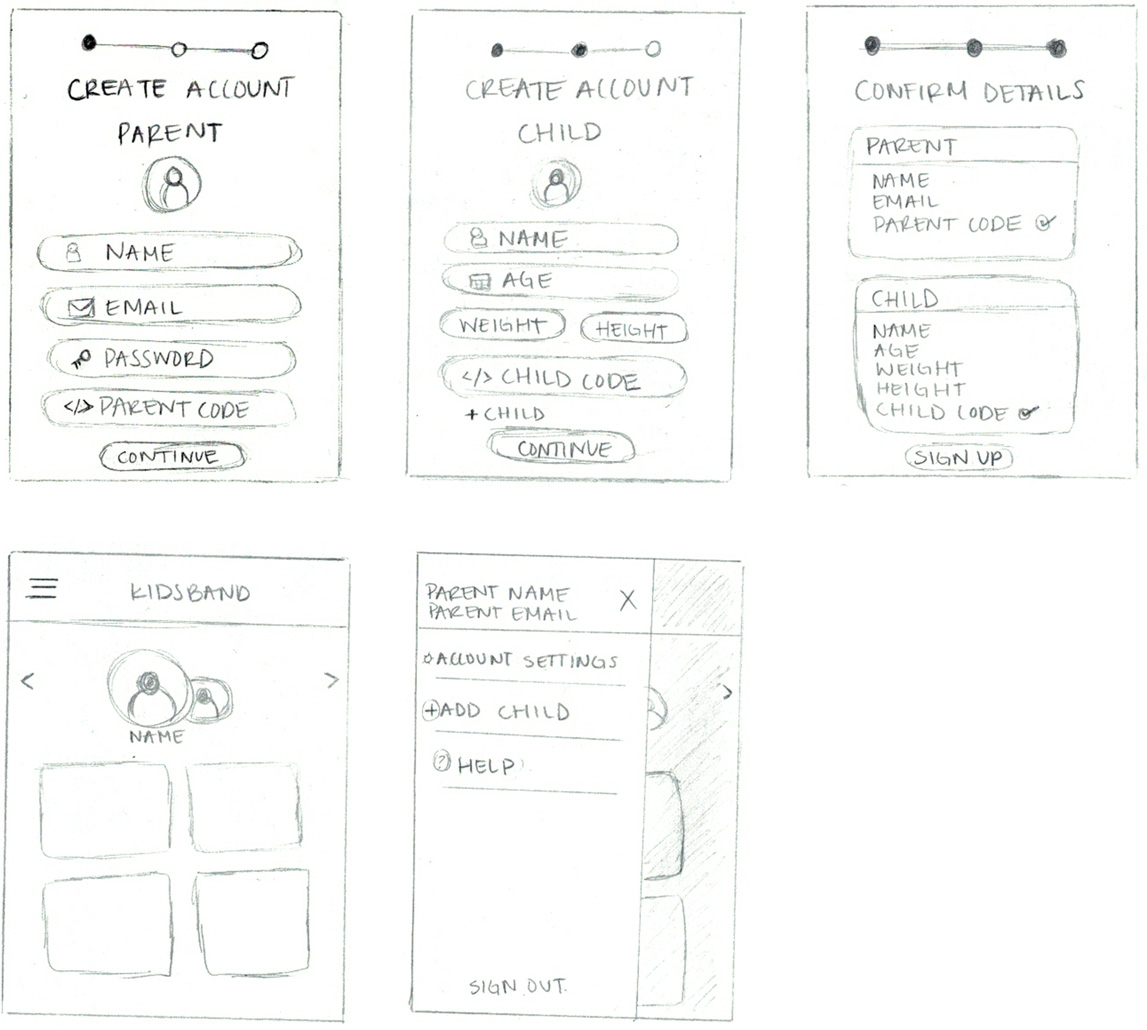
Our next steps included interviewing users from our primarily target audience which included a mixture of parents and guardians. We ran through the paper prototypes of our app with the aid of a physical wristband to ensure that this tool would be something our target audience would deem as vital and impactful to their everyday lives. Not too long into each of our interviews did we find out that most, if not all, of the parents/guardians shared the same senses of worry, panic, and anxiety over the well-being of their children. After each interview, Kidsband emerged as an essential tool that parents would invest in and find value in for their own peace of mind.
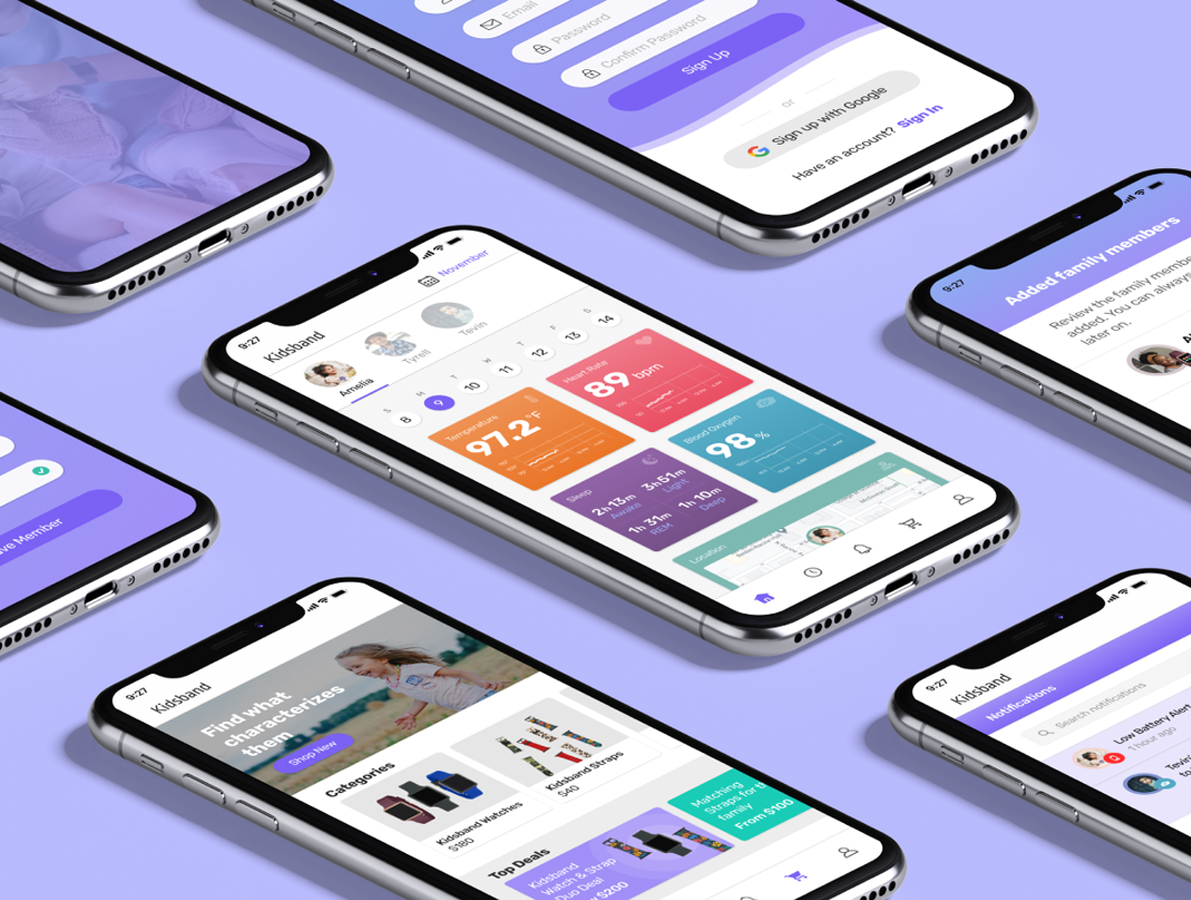
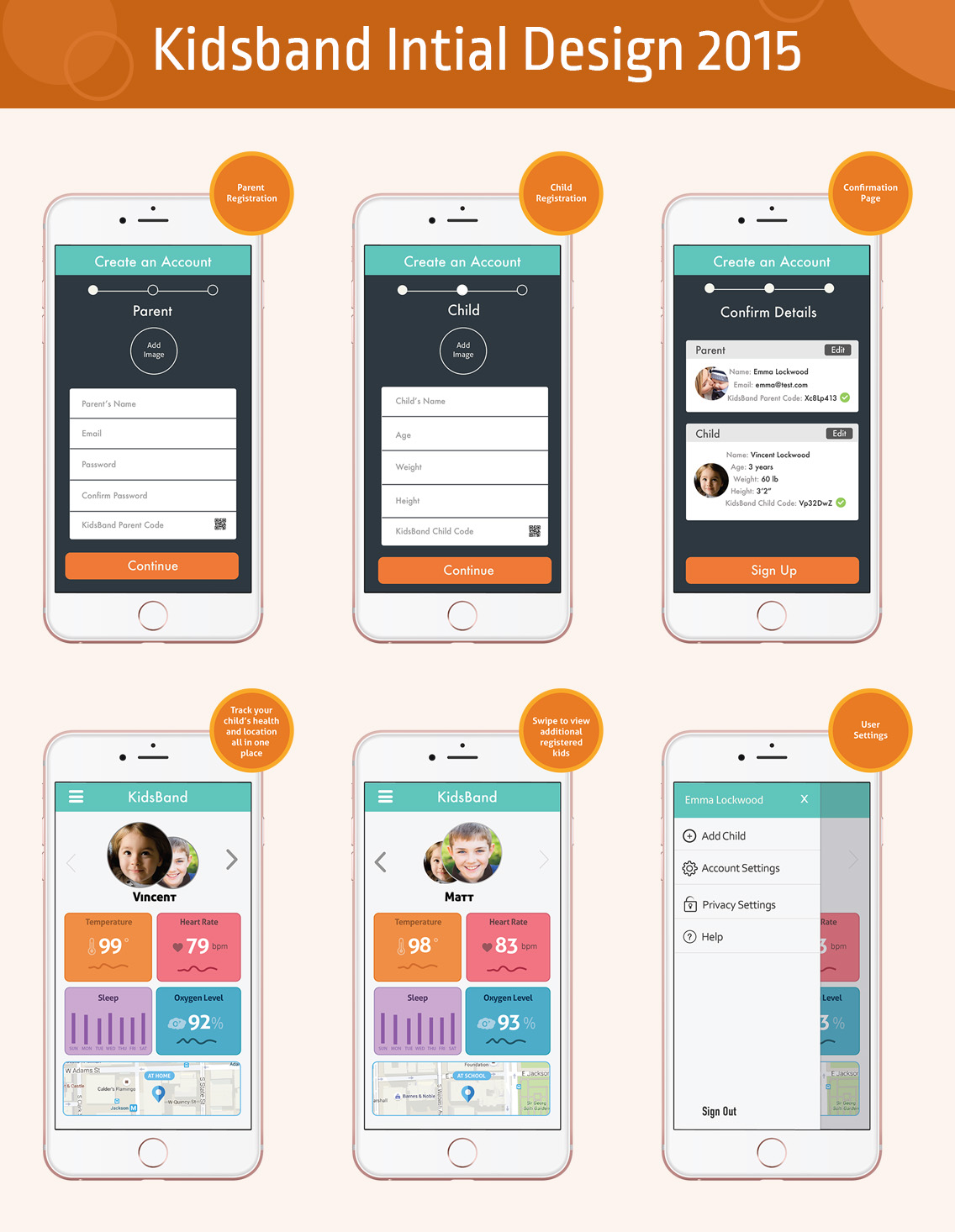
Upon completion of our interviews and the analysis of all the qualitative data, I then moved to creating mid-fidelity mockups of Kidsband in Axure. The design was fueled by insights found from the interviews and qualitative data. The primary piece being that the signup process should be quick and seamless during one's busy schedule. A few of our participants agreed to being participating in a short usability test of the current low fidelity state of Kidsband. Design iterations were following the usability test to get the product closer to more of a high-fidelity state.
Following the competition, an unexpected insight from a professor expanded the product's potential audience beyond children to seniors and individuals requiring continuous health monitoring — a pivotal moment that reshaped the product vision. In 2020, I revisited Kidsband with fresh eyes, conducting a new competitive analysis against modern players like the Apple Watch and redesigning the experience with updated features to meet the demands of a more competitive landscape.
When I looked back at the project, I found that it appeared very outdated, and also lacked a lot of essential new features that would make it a powerful contender for the current times. I performed a new competitive analysis with new and well known names on the market in which Kidsband could compete with, such as the Apple Watch.
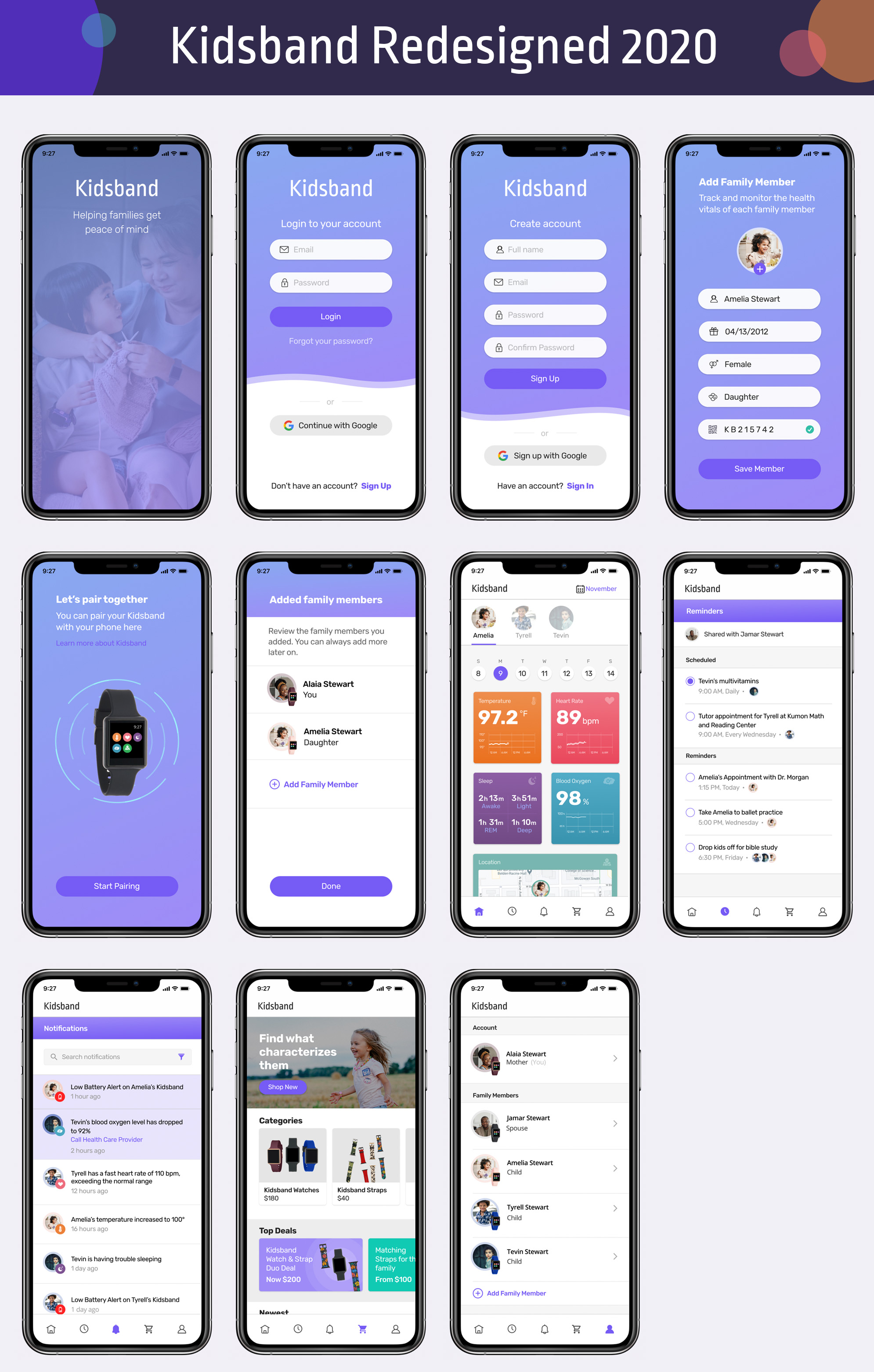
Kidsband placed 3rd at Launch DePaul, and while we were proud of the result, one moment after the competition stood out above all else. A professor approached me with feedback that completely reframed how I thought about the product. She shared that although Kidsband was designed with children in mind, she saw real value in using it to monitor her husband, who lived with severe dementia and hypertension. That single conversation was a turning point. It revealed that the need we had designed for extended far beyond parents and children, opening the door to seniors and anyone requiring continuous health oversight.
That insight fueled a full redesign in 2020. After revisiting the competitive landscape, I identified key opportunities to make Kidsband more impactful and introduced three new features:
I'm a Product Designer based in Chicago with experience in delivering 0 → 1 products that meet business goals.